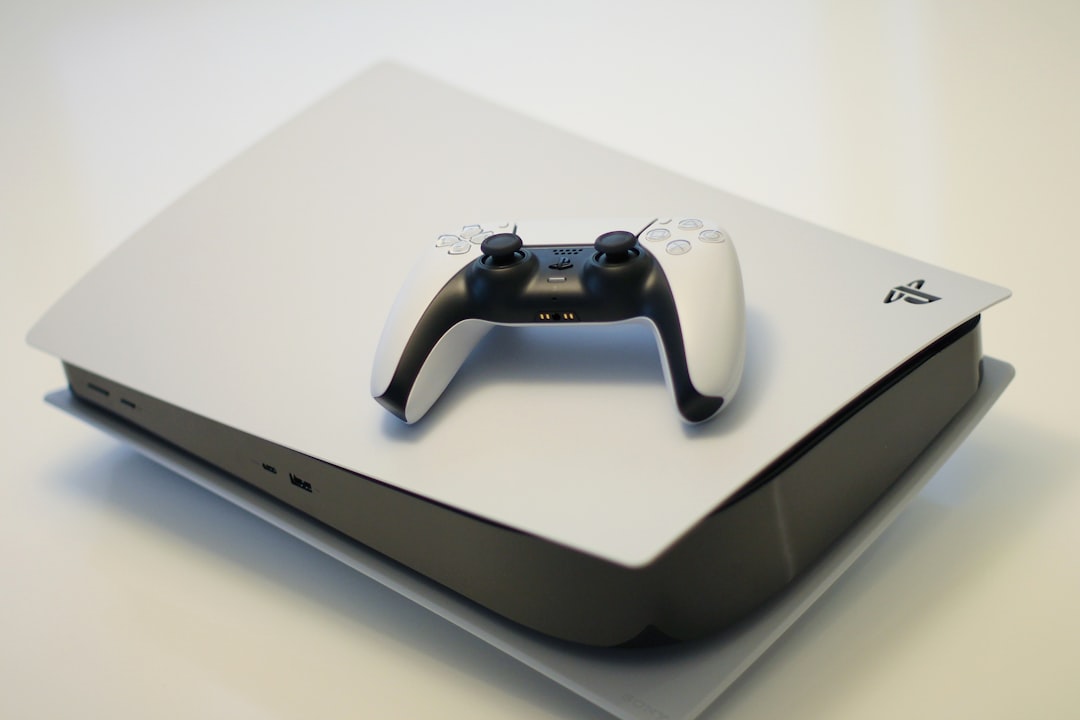
Gears of War: E-Day rated PEGI 18 for XBOX, PS5 and PC
Photo by Yura Timoshenko on Unsplash
Gears of War: E-Day getting a PEGI 18 rating isn’t news; Gears of War coming to PS5 is the seismic event we should actually be talking about.
The Blood-Soaked Obvious: PEGI 18 for Gears
Let’s not pretend to be shocked by Gears of War: E-Day landing an 18 rating. This isn’t exactly My Little Pony: Friendship is Magic we’re discussing here. This is Gears. The franchise built its entire identity on curb stomps, chainsaw bayonets, and grotesque alien viscera splattering across the screen in glorious, chunky detail. It’s a series that makes arterial spray an art form.
I’ve covered every E3 reveal, every GDC post-mortem for Gears since the original back in ‘06. From the moment Epic Games first showed off that gritty, oppressive world and Marcus Fenix carving up a Locust, the trajectory was clear. This was never going to be a T for Teen game. The violence is integral to its aesthetic, its gameplay loop, and its very soul. Anything less than an 18 or M rating would imply a fundamental misunderstanding of what Gears is, or worse, a neutering of its core appeal. The rating itself is confirmation The Coalition understands the assignment. They’re not pulling punches. Good.
The real headline here isn’t the number, but the platforms attached to it. Xbox, PC, and PlayStation 5. Let that sink in.
The PS5 Elephant in the Room: A New Era for Xbox Exclusives?
This isn’t just another game getting a rating; it’s a statement. A very loud, very clear statement from Microsoft. Gears of War, a franchise synonymous with the Xbox brand since its inception, is potentially headed to PlayStation. The industry has been buzzing with rumors, of course. We’ve seen Hi-Fi Rush, Sea of Thieves, Grounded, and Pentiment make the jump. But Gears? That’s a whole different beast. That’s a sacred cow, a system seller from the Xbox 360 era.
This isn’t a mere port of an older title to test the waters. This is E-Day, a brand new, major entry. It’s set to be a flagship title for Xbox’s future. Its presence on a PEGI rating for PS5 suggests a foundational shift in Microsoft’s approach to its first-party studios and their output. The console wars, as we knew them, are dead. Or at least, they’re dying a slow, agonizing death by a thousand multiplatform ports. The old playbook, where console manufacturers relied solely on exclusive blockbusters to drive hardware sales, is being shredded.
The financial realities of AAA game development are brutal. Budgets routinely soar past $200 million, sometimes even hitting $300 million or more when you factor in marketing. To recoup those costs, especially for a game with the scale and ambition of a Gears title, you need the widest possible audience. Limiting a potential blockbuster to a single console ecosystem, even with Game Pass, might no longer be sustainable for Microsoft’s long-term strategy. This isn’t about charity; it’s about market penetration and maximizing revenue streams. The Xbox division likely sees the PlayStation platform not as a competitor to be crushed, but as an untapped market of tens of millions of potential customers.
Rating Systems Demystified: What Does PEGI 18 Actually Mean?
Let’s dissect what these ratings actually signify. PEGI, the Pan European Game Information system, is the standard across most of Europe. Its 18 rating, much like the ESRB’s M for Mature in North America, means a game is deemed suitable only for adults. This isn’t merely a suggestion; it’s a legal classification in many territories. The criteria for an 18 rating are pretty clear-cut: graphic violence (especially against vulnerable characters, though Gears rarely features those in an explicit way), depictions of illegal drug use, gambling, sexual content, and strong discrimination.
For Gears, it’s almost entirely about the violence. The game revels in its brutality, from the aforementioned curb stomps to the gory executions and the sheer volume of blood and guts spilled. This isn’t a new development. The original Gears was a poster child for violent M-rated games. Developers working on a Gears title know this is part of the package. They lean into it. The rating system, in this instance, serves its purpose: informing consumers exactly what kind of content they’re getting.
Different rating boards have different nuances. The ESRB, for example, is run by the Entertainment Software Association (ESA), an industry trade group. PEGI is an independent body. Japan’s CERO system has its own quirks, often being more lenient on violence but stricter on sexual content. Despite the variations, the goal is always the same: consumer protection and informed choice. They aren’t perfect, and they’ve been subject to plenty of debate over the years regarding their effectiveness and potential for censorship, but they remain a ubiquitous part of the gaming landscape. Having covered the moral panic cycles around video game violence for two decades, I’ve seen politicians grandstand about these ratings more times than I can count. Yet, here we are, still playing our violent games, still getting our 18 ratings.
Comparative Rating Criteria: Gears vs. Other Mature Titles
| Game Title (Example) | Primary Rating Reason (PEGI) | PEGI Rating | ESRB Rating | Key Content Descriptors (PEGI) |
|---|---|---|---|---|
| Gears of War: E-Day | Intense, graphic violence | 18 | M (Expected) | Extreme Violence, Gore, Strong Language |
| Cyberpunk 2077 | Violence, Sex, Drugs, Language | 18 | M | Extreme Violence, Sex, Drugs, Strong Language |
| Grand Theft Auto V | Violence, Sex, Drugs, Language | 18 | M | Extreme Violence, Sex, Drugs, Strong Language, Discrimination |
| The Last of Us Part II | Extreme violence, Gore | 18 | M | Extreme Violence, Gore, Strong Language, Sexual Content |
| Call of Duty: Modern Warfare | Realistic violence, Language | 18 | M | Strong Violence, Strong Language |
| Resident Evil Village | Graphic violence, Horror | 18 | M | Extreme Violence, Gore, Horror, Strong Language |
This table underscores that Gears sits comfortably in the same category as other adult-oriented blockbusters. Its content is not an outlier but rather a staple of the mature gaming market.
E-Day: Back to the Beginning, with a Gory Twist
The decision to go back to “E-Day,” the Emergence Day, the very beginning of the Locust War, is fascinating. Gears of War has always had a strong narrative, even if it was often overshadowed by its visceral action. The original game, in particular, had a grimy, almost horror-like atmosphere that subsequent entries, while excellent action games, sometimes lost in favor of bigger set pieces. Returning to E-Day allows The Coalition to re-explore those horror roots. The initial invasion was a terrifying, unknown threat. Cities fell in hours. Humanity was on the brink. This setting offers a chance to double down on the psychological impact of the Locust, making them truly terrifying again, not just cannon fodder.
From a development perspective, it’s a smart move. It allows new players, especially those on PlayStation who might never have touched a Gears game, to jump in without needing to know a decade and a half of convoluted lore. It’s a clean slate, while still leveraging the established brand power. It’s a reboot in spirit, if not in name. The storytelling potential is immense, exploring the initial shock and despair of humanity. Imagine the carnage, the desperation, depicted with modern graphics and gameplay mechanics. The PEGI 18 rating ensures they won’t shy away from the brutality such a scenario demands. We can expect unbridled chaos and the kind of high-stakes, desperate combat that defined the original.
The Shifting Sands of Exclusivity and Microsoft’s New Playbook
The idea of console exclusives has always been the bedrock of the gaming industry’s competitive landscape. Nintendo has Mario and Zelda. Sony has God of War, Spider-Man, and The Last of Us. Microsoft had Halo and Gears. These franchises were the reasons you bought that box. But the industry is changing. The costs are too high, the market too fragmented. Microsoft, with its deep pockets and cloud ambitions, appears to be pivoting.
Their strategy seems to be evolving into a “platform agnostic” approach, where Game Pass is the true ecosystem, not the Xbox console itself. If they can get Game Pass on every screen, whether it’s an Xbox, a PC, a mobile device via cloud streaming, or even, controversially, a PlayStation, then the physical console becomes less critical. It transforms Xbox into a service provider rather than just a hardware vendor. This allows them to tap into a much larger installed base, especially the roughly 50 million PS5 owners who currently can’t play their biggest titles. The Verge reported extensively on Microsoft’s initial multiplatform moves, highlighting the shift.
This isn’t about abandoning the Xbox console. It’s about expanding the reach of their content. The console will likely remain the best place to play many of these games, especially from a performance and immediate access perspective, but it won’t be the only place. This also puts pressure on Sony. Will they eventually reciprocate, bringing God of War to Xbox? Unlikely in the short term, given Sony’s strong commitment to its first-party exclusives driving console sales, but the landscape is shifting. Money talks, and the potential revenue from selling Gears on PS5 could be enormous.
Reddit’s Echo Chamber: Panic, Hype, and Resignation
The moment this news hit r/gaming, you could almost hear the collective groans and shouts. The typical Reddit reactions were instant and predictable:
- “Gears on PS5?! Xbox is dead!” This was the immediate, knee-jerk reaction from a vocal segment of the Xbox faithful. A sense of betrayal, of losing their unique selling proposition. The “console war” mentality is deeply ingrained for many.
- “PEGI 18, duh. What else would it be?” The rationalists, pointing out the obvious about the rating, trying to steer the conversation back to the actual, surprising news.
- “This means Game Pass is coming to PlayStation, mark my words.” The hopeful analysts, predicting the next logical step in Microsoft’s multiplatform play.
- “Good, more people should play Gears.” The pragmatic gamers, happy that more players will get to experience a beloved franchise, regardless of their preferred platform.
- “RIP Xbox exclusives, enjoy your PC port.” The cynical PC gamers, who’ve long seen Xbox “exclusives” as PC games anyway, now extending that sentiment to PlayStation.
- “Hope they don’t censor it for PlayStation.” The perennial concern whenever a violent game crosses platforms or regions, though PEGI ratings are usually consistent.
The dominant sentiment, however, revolved around the PS5 mention. It overshadowed the rating entirely, and for good reason. It’s a bigger story about the future of gaming than a simple age restriction. It reinforces the idea that Microsoft is no longer prioritizing hardware sales above all else, but rather expanding its content ecosystem.
The Coalition’s Challenge: Honouring the Past, Forging the Future
The Coalition took over the Gears franchise from Epic Games and has done a commendable job with Gears of War 4 and Gears 5. They understand the mechanics, the characters, and the tone. But E-Day presents a unique challenge: returning to the genesis of the conflict. This isn’t just another sequel; it’s a re-examination of the series’ very foundation. They need to capture the terror and desperation of the original Gears, while leveraging modern technology and narrative sophistication.
They’re working with Unreal Engine 5, which means the game will undoubtedly be a visual powerhouse. The fidelity of the Locust, the crumbling cities, the sheer scale of the conflict – all can be rendered with breathtaking detail. This is their chance to redefine what Gears means for a new generation, while also appealing to the veterans who remember the first time they heard that distinct Locust roar. The PEGI 18 rating gives them the freedom to make it as brutal and unflinching as the story demands. They need to deliver a game that not only pushes technical boundaries but also re-establishes the narrative weight and emotional impact that made the original so compelling.
What This Means for Xbox: A Brand in Transition
| The implications for the Xbox brand are profound. For years, Xbox has been fighting an uphill battle against PlayStation’s market dominance. Their answer has been Game Pass, a strong acquisition strategy, and a commitment to cloud gaming. Now, adding their flagship titles to competitor platforms suggests a further evolution of this strategy. Is Xbox becoming more like Sega in its later years, moving from hardware to pure software and services? Not quite. Microsoft still manufactures consoles, and the Xbox Series X | S are powerful machines. But the emphasis is shifting. |
This move could be seen as an admission that the traditional console war model isn’t working for them, at least not in the way it once did. Instead, they’re attempting to conquer through content distribution. The Xbox console could become the premium way to experience Game Pass, with guaranteed day-one access and optimal performance. But if you own a PS5 and still want to play Gears, Microsoft isn’t saying no anymore. This is a gamble. It risks alienating some of the most loyal Xbox fans who bought the console specifically for these exclusives. But it could also open up massive new revenue streams and establish Game Pass as a truly ubiquitous service. Having covered the industry through multiple console cycles, I’ve seen brands rise and fall on far less dramatic shifts. This isn’t the end of Xbox, but it’s certainly the end of Xbox as we once knew it.
The Future of Brutality: E-Day’s Bloody Promise
Gears of War: E-Day will be bloody, unapologetic, and rated 18. Its arrival on PS5 signifies a new, unpredictable chapter in the console wars, where the lines blur and content reigns supreme.