Tesla Cooked FSD Data for Approval
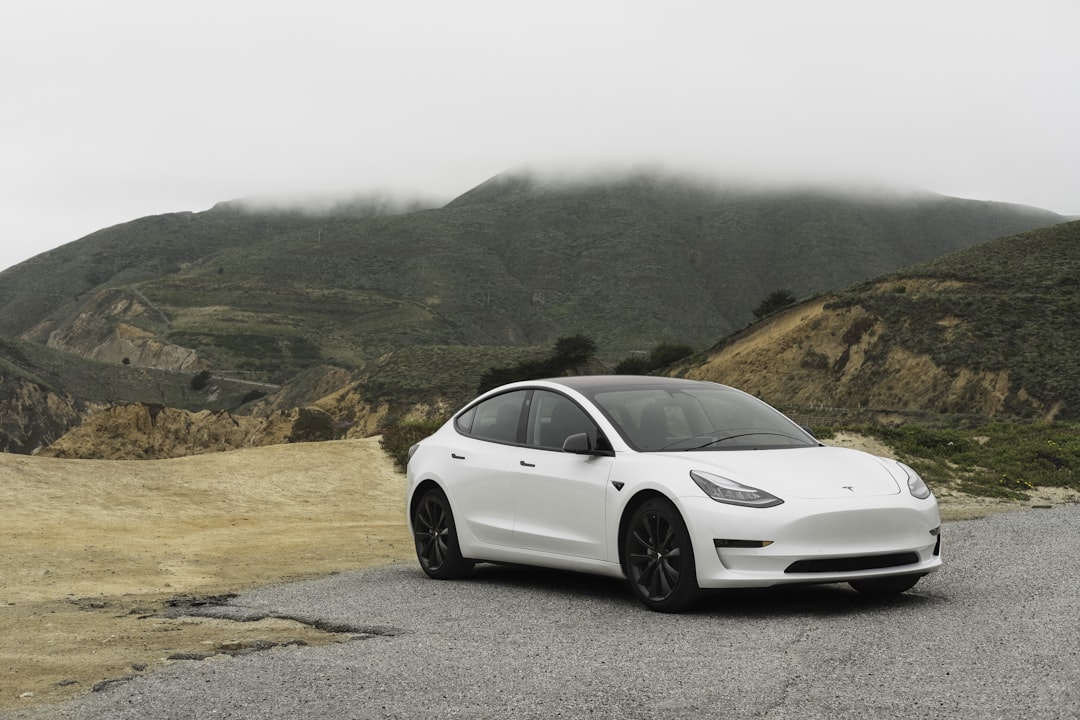
Photo by Charlie Deets on Unsplash
Tesla’s “Full Self-Driving” was always a marketing masterclass in over-promising, and the latest allegations suggest the data supporting it might have been just as artfully crafted.
The notion that Tesla, a company built on a cult of personality and the promise of a sci-fi future, might have played fast and loose with data to get its “Full Self-Driving” (FSD) system approved barely registers as a surprise to anyone who’s covered this industry for more than a year. It’s a familiar tune, played on a different instrument. We’ve seen this kind of aggressive self-promotion morph into regulatory headaches time and again, from Theranos to various dot-com busts. Tesla just does it with more flair and a legion of vocal defenders.
The Grand Illusion: ‘Full Self-Driving’ Versus Reality
For years, Elon Musk has been promising a robotaxi future “next year.” Remember 2017, when he confidently predicted a coast-to-coast autonomous drive? Or 2019, when he outlined a million robotaxis on the road by the end of 2020? The goalposts have shifted so often they’ve likely sprouted wheels and joined the FSD beta program. What consumers have actually received, after shelling out thousands of dollars for the FSD package, is an advanced driver-assistance system (ADAS) that requires constant human supervision. It’s a Level 2 system, plain and simple, dressed up in Level 5 branding.
This semantic sleight of hand is where the rubber meets the road, or rather, where the marketing brochure meets the legal department. Regulators, particularly the California Department of Motor Vehicles (DMV), have long been wary of the “Full Self-Driving” moniker. The DMV even issued regulations specifically targeting misleading claims in autonomous vehicle advertising. The latest reports, suggesting that Tesla demonstrated FSD under meticulously controlled conditions, potentially editing out significant failures, only underscore the chasm between the brand promise and the engineering reality. It’s a classic case of showing the highlight reel while conveniently forgetting the bloopers.
The Allegations: Cherry-Picking Data for Approval
The core of the recent controversy revolves around claims that Tesla specifically curated and potentially manipulated the data presented to regulatory bodies to secure FSD approval. This isn’t just about glossy promotional videos; it’s about the underlying metrics and performance indicators that supposedly demonstrate safety and capability. If true, it paints a picture of a company not just optimizing for success, but actively constructing it for regulatory eyes.
Imagine a student submitting a thesis, but only including the experiments that worked perfectly, omitting the dozens that failed spectacularly. That’s the essence of what’s being alleged here. It suggests a deliberate effort to present an artificially flawless system, thereby sidestepping legitimate safety concerns. This kind of selective transparency, if proven, doesn’t just erode trust; it actively endangers it, both for Tesla and the wider autonomous vehicle industry.
A History of Audacious Claims and Regulatory Headaches
Tesla’s relationship with regulatory bodies has always been… complex. From the initial rollout of Autopilot, which some users tragically misinterpreted as fully autonomous, leading to fatal crashes, to ongoing investigations by the National Highway Traffic Safety Administration (NHTSA) into phantom braking and collision incidents, the company has consistently pushed the envelope. I’ve seen countless tech companies try to outrun regulators, but Tesla often does it with a bravado that’s almost admirable, if not for the safety implications.
The issue isn’t merely one of marketing hype. When a system is branded “Full Self-Driving,” consumers, despite disclaimers, inevitably assume a higher degree of autonomy than is present. This cognitive dissonance creates a dangerous environment. It places the burden of vigilance squarely on the driver, who has been conditioned to believe the car can handle most situations, leading to complacency. This isn’t theoretical; it’s a pattern observed in numerous accident reports involving Tesla vehicles.
The Technical Grind: Why Full Autonomy Remains Elusive
Achieving true Level 5 autonomy—where a vehicle can operate completely without human intervention under all conditions—is an astronomically difficult engineering challenge. It’s not just about object recognition or lane keeping. It’s about navigating “edge cases”: the unexpected child chasing a ball into the street, the unreadable sign obscured by rain, the flashing lights of an emergency vehicle from an unusual angle. These are the moments where human intuition and experience truly shine, and where AI still falters.
Tesla’s camera-only approach, while innovative, has been a contentious point. Competitors like Waymo and Cruise heavily rely on Lidar and radar, creating a redundant sensor suite designed to provide a more robust environmental perception. Tesla’s argument has always been that the human brain can drive with just vision, so a machine should too. That’s a fundamentally flawed analogy. The human brain, after all, has evolved over millions of years to interpret a complex world, not just detect pixels.
Competitors’ Cautionary Tales and Different Paths
While Tesla aggressively rolls out its FSD beta to thousands of customers, often touting its “real-world data” advantage, other major players have taken a far more cautious, geofenced approach. Waymo, Alphabet’s autonomous driving unit, operates in limited areas, typically in favorable weather conditions, using highly detailed 3D maps and a robust sensor suite. They focus on proving safety within a defined operational design domain (ODD) before expanding.
Cruise, GM’s self-driving subsidiary, also followed a similar path, though their recent troubles in San Francisco, including a pedestrian incident that led to the suspension of their California operating permit, highlight the immense challenges even with a highly controlled deployment strategy. Their incident underscored how quickly public and regulatory trust can evaporate when safety is compromised. These companies, despite their own hurdles, generally avoid the “full self-driving” branding until they are demonstrably much closer to true Level 4 or 5.
| Autonomy Level (SAE) | Description | Human Oversight Required? | Current Tesla FSD (Reality) | Waymo/Cruise (Current) |
|---|---|---|---|---|
| Level 0 | No Automation | Always | N/A | N/A |
| Level 1 | Driver Assistance (e.g., adaptive cruise control) | Always | Partial | N/A |
| Level 2 | Partial Automation (e.g., Autopilot, FSD Beta) | Always (Driver supervises) | Yes | N/A |
| Level 3 | Conditional Automation | Yes (Driver must be ready to intervene) | No | No |
| Level 4 | High Automation (Self-driving in ODD) | No (Within ODD) | No | Yes (Geofenced, limited) |
| Level 5 | Full Automation (Any condition) | No | No | No |
Table: SAE Autonomy Levels and Current Industry Standings
The table makes it starkly clear: Tesla’s FSD, even at its best, falls squarely into Level 2. The name “Full Self-Driving” is a marketing misnomer that the industry, and increasingly regulators, are struggling to reconcile with the technical reality.
Reddit’s Echo Chamber: Belief Versus Skepticism
The Reddit threads, as always, are a glorious mess of confirmation bias and outrage. You’ve got the usual chorus of devoted Tesla fans immediately dismissing the allegations as FUD (Fear, Uncertainty, Doubt) and a coordinated attack by short-sellers or legacy auto interests. “It’s a witch hunt!” they cry, “NHTSA is just trying to slow down innovation!” They’ll point to the millions of miles driven and gloss over the incidents, often arguing human drivers are far worse.
Then there’s the equally vocal contingent of skeptics, many of whom have been calling this out for years. “Told you so,” is the common refrain. They’re quick to pull up old Musk tweets promising imminent robotaxis, using them as evidence of a long-standing pattern of hyperbole. For them, this alleged data manipulation is just another brick in the wall of Tesla’s questionable practices, further vindicating their long-held distrust. It’s less a debate and more two parallel monologues.
The Business Implications: More Than Just PR
This isn’t just a bad news cycle. If these allegations of cooked data prove true, the fallout could be significant. Regulatory bodies, already scrutinizing Tesla, could levy heavier fines, mandate clearer disclaimers, or even restrict the rollout of FSD. The Department of Justice is reportedly already investigating Tesla’s FSD claims. A formal finding of deception could seriously damage Tesla’s brand, which has, until now, largely been insulated by its innovative image and loyal fanbase.
Beyond the regulatory slap, there’s the financial impact. FSD is a lucrative revenue stream for Tesla, both as an upfront purchase and a subscription service. Its perceived value is directly tied to the promise of full autonomy. If that promise is demonstrably based on doctored information, consumer confidence will plummet, affecting sales and the company’s long-term valuation. A significant portion of Tesla’s market cap is arguably predicated on its lead in autonomous technology, a lead that this kind of scandal could severely undermine.
What Happens When Trust Erodes?
Having covered technology for over a decade, I’ve seen countless companies crash and burn when they lose the trust of their customers and regulators. Once that trust is gone, it’s incredibly difficult to win back. Companies like Volkswagen with “Dieselgate” faced massive fines and a long, arduous road to rehabilitation. While Tesla’s product is different, the core issue of allegedly deceiving regulators and the public about a critical feature, especially one tied to safety, carries similar weight.
The broader implication for the autonomous vehicle industry is also concerning. Every time a major player is accused of cutting corners or misleading the public, it casts a shadow over the entire sector. It fuels public skepticism, makes it harder for legitimate advancements to gain acceptance, and emboldens regulators to be even more cautious, potentially slowing down the rollout of genuinely safe and beneficial autonomous technologies. It’s a classic case of a few bad apples spoiling the barrel.
The Long Road Ahead for Real Autonomy
The dream of a fully autonomous future is still very much alive, but it’s a marathon, not a sprint. Companies that prioritize safety, transparency, and incremental, verifiable progress will ultimately win the race. Those that prioritize hype and potentially deceptive practices might gain a short-term advantage, but they risk derailing not only their own efforts but the entire industry’s.
This alleged data manipulation, if confirmed, isn’t just about a car company. It’s a stark reminder that in the rush to innovate, ethical boundaries are sometimes blurred, and the pursuit of a technological utopia can sometimes lead down a path of questionable practices. The real innovation isn’t just in the code; it’s in the integrity with which it’s developed and presented to the world.