Peppa Pig AI Voice Rights for Child Actors Stink
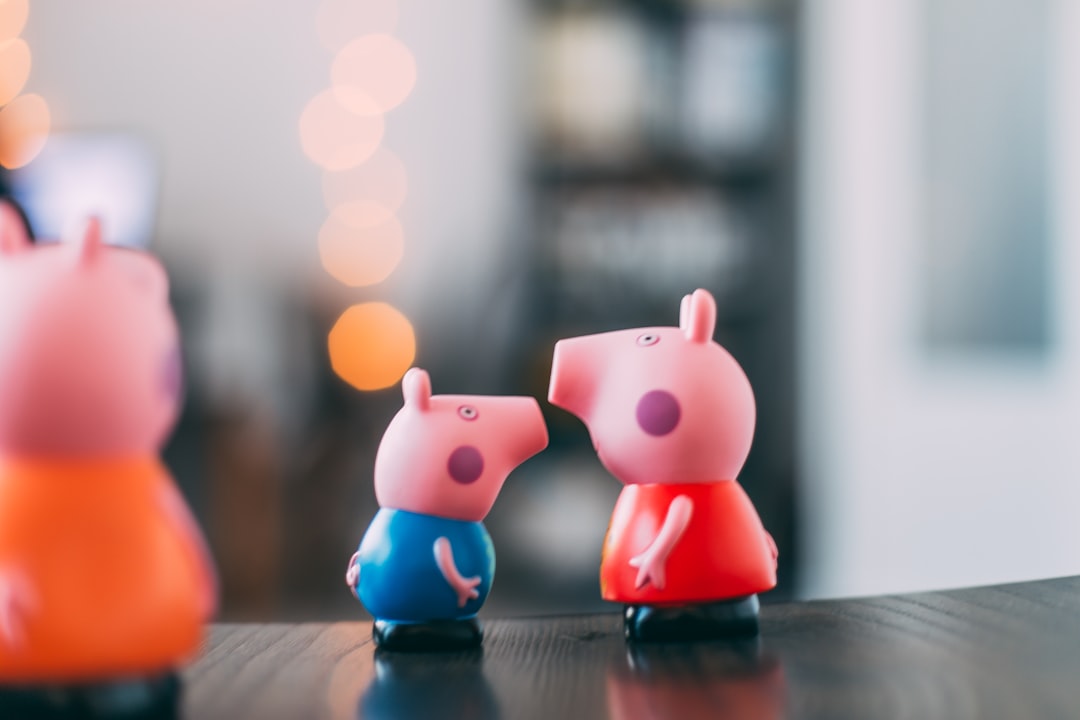
Photo by Daiga Ellaby on Unsplash
Hasbro’s Peppa Pig voice contract is a dystopian pre-nup for child actors.
This isn’t just about Peppa Pig. This is about every kid who dreams of being a voice actor, every parent who thinks their child’s talent is a ticket to something better. Hasbro, through its agent, is trying to buy not just the performance, but the future essence of a child’s voice. They’re offering a few grand to own a digital ghost of that voice forever, to train AI on it, to replicate it, to replace the human child it came from.
The AI Clause: A Sign of the Times
The contract, specifically the offending clause 18.1, attempts to secure a “consent to the use of [the child actor’s] voice… including through AI.” It’s not subtle. It’s a blatant land grab for biometric data, dressed up as standard industry practice. The wording is broad enough to drive a double-decker bus through, leaving the door wide open for any future AI application Hasbro dreams up.
Parents are understandably horrified. Reddit, specifically r/technology, is ablaze with the kind of righteous anger you usually see reserved for loot boxes or buggy game launches. People are calling it everything from “vile” to “child exploitation.” They’re not wrong. This isn’t just a legal maneuver; it’s a moral failure.
Hasbro’s PR team is probably earning their paychecks overtime this week, trying to spin this. They’ll claim it’s “standard” or “protective” or “forward-thinking.” It’s none of those things. It’s an attempt to normalize the commodification of human identity, starting with the most vulnerable.
The Unspoken Implications for Child Actors
Think about what this means. A child’s voice, captured at a specific age, could be used to generate new lines, new songs, new permutations of Peppa Pig long after they’ve outgrown the role. They could be 30, trying to break into serious dramatic acting, and their childhood self is still squealing about muddy puddles, generated by an algorithm.
This isn’t a hypothetical. The technology exists now. Deepfake audio is frighteningly good. What Hasbro is asking for is an unlimited license to a child’s unique vocal signature, to be used in ways that haven’t even been invented yet. The compensation for this perpetual digital servitude? A paltry daily rate. It’s an insult.
I’ve seen studios pull shady contracts before. I remember the early days of motion capture, where artists were signing away rights to their digital likenesses with little understanding of the long-term implications. This is worse. This is about a child’s voice, a fundamental part of their identity and future livelihood.
This isn’t just about Peppa Pig. This is a canary in the coal mine for the entire entertainment industry. If Hasbro gets away with this, every other studio, every animation house, every game developer will follow suit. Why pay a child actor for new lines when you can just prompt an AI model trained on their old ones?
A Pattern of Corporate Overreach
This isn’t Hasbro’s first rodeo with controversial moves. They’ve been criticized for everything from their handling of Magic: The Gathering’s Open Game License to their relentless pursuit of maximum shareholder value at the expense of creative integrity. This latest move fits a pattern. It’s about extracting maximum value from intellectual property, even if that IP is a child’s voice.
Remember the SAG-AFTRA strike? A core issue was AI. Actors were fighting precisely this kind of broad, undefined language that allows studios to scan their likenesses or record their voices and use them forever, without additional compensation or consent. Hasbro is trying to sidestep all that collective bargaining by targeting individuals, particularly children whose parents might not understand the technological implications.
The Legal and Ethical Minefield
Legally, this is a quagmire. Child labor laws, intellectual property rights, biometric data privacy – it all gets tangled. Can a minor truly consent to something so far-reaching? Can a parent sign away rights that might impact their child’s future career and identity? These are questions that will likely end up in court if Hasbro doesn’t back down.
Ethically, it’s indefensible. We talk about protecting children online, about safeguarding their digital footprint. Then a major corporation swoops in and tries to claim ownership of their vocal identity. It’s a stark reminder that in the rush for technological advancement, basic human rights often get trampled.
How the Peppa Pig AI Clause Breaks Down
| Aspect | Hasbro’s Goal | Actor’s Loss | Industry Impact |
|---|---|---|---|
| Voice Rights (Clause 18.1) | Perpetual, unlimited use of voice, including AI generation | Future income from voice acting, control over digital likeness | Sets precedent for exploiting child actors, devalues human performance |
| Compensation | One-time payment for performance and AI rights | Lost residuals, no future pay for AI-generated content | Drives down rates for human talent, incentivizes AI replacement |
| Control Over Likeness | Complete corporate control over digital voice identity | Personal agency, artistic integrity, potential for misuse | Normalizes corporate ownership of biometric data, especially from minors |
| Market Value | Cost-cutting by replacing future human work with AI | Erosion of career opportunities, market value of human voice | Accelerates AI adoption in creative fields, potentially leading to widespread job displacement |
This table lays it bare. Hasbro wants a cheap, infinite content generator. The child actor loses agency, future income, and control. The industry, if it allows this, moves closer to a fully automated, soulless production line.
Community Backlash and Corporate Deafness
The Reddit community isn’t just outraged; they’re offering solutions and warnings. “Don’t sign it,” is the dominant sentiment. Others are calling for collective action, boycotts, and increased union pressure. It’s a grassroots resistance to corporate overreach, and it’s powerful because it’s coming from people who understand the technology.
Many comments highlight the specific danger: “They’re trying to build a database of child voices to use forever without paying residuals.” This isn’t paranoia; it’s a realistic assessment of the endgame. Why else would you include such an aggressively broad clause?
Having covered countless community meltdowns, I can tell you this isn’t going away quietly. The sheer moral repugnance of exploiting child actors for AI training data hits a nerve that very few other issues do. It’s not about politics or console wars; it’s about basic human decency.
The Broader AI Debate in Entertainment
This Peppa Pig debacle isn’t isolated. The entertainment industry is grappling with AI on all fronts. Screenwriters are worried about AI generating scripts. Visual artists are fighting back against AI trained on their work without consent or compensation. Musicians are seeing AI generate tracks in the style of existing artists.
The common thread? Corporations see AI as a cost-cutting tool, a way to bypass human talent and its pesky demands for fair pay and working conditions. The artists, meanwhile, see it as an existential threat to their livelihoods and their craft. The SAG-AFTRA strike of 2023 made this abundantly clear, highlighting AI and streaming residuals as central points of contention.
This Peppa Pig contract is a perfect microcosm of that larger battle. It’s the frontline, and it’s targeting the most vulnerable. Hasbro is effectively trying to create a perpetual intellectual property machine out of a child’s voice.
The Future of Voice Acting: Human or Algorithm?
Voice acting has always been a niche, highly skilled profession. It requires nuance, emotion, and an ability to convey character through sound alone. Can AI replicate that? To a degree, yes, for simple, repetitive tasks. But for the soul of a performance, for truly bringing a character to life, it still falls short.
The danger isn’t that AI will suddenly replace all voice actors overnight. The danger is that it will slowly chip away at opportunities, driving down rates, and making it harder for new talent to break in. If studios can generate a significant portion of their content using AI-generated voices, the demand for human actors diminishes. Ars Technica reported on similar concerns during the Hollywood strikes, detailing the specific worries about studios demanding scans of actors’ bodies and voices for AI training without proper compensation.
Imagine a world where the only entry-level voice acting jobs are for characters whose voices will be immediately scanned, processed, and owned by a corporation for AI training. That’s not a ladder; it’s a trap door. It’s a way to feed the AI beast with cheap, unwilling contributors.
The Role of Unions and Advocacy
This is where unions, like Equity (the UK actors’ union that voiced concerns about this contract), become crucial. They exist to protect artists from precisely this kind of exploitative overreach. Their pushback against these clauses is vital. Without collective strength, individual actors, especially parents of child actors, are at a severe disadvantage when negotiating with multi-billion dollar corporations.
Parents of young actors often lack the legal expertise or the industry leverage to push back effectively. They might see the immediate paycheck and miss the long-term implications. That’s why public awareness, media scrutiny, and union guidance are so important here. It’s not just a contract; it’s a precedent.
Peppa Pig’s Unsavory Legacy
The show is beloved globally, a cultural phenomenon. It teaches kids about friendship, family, and muddy puddles. But this contract clause taints that legacy. It turns a wholesome children’s brand into a symbol of corporate greed and AI exploitation. It exposes the darker side of the entertainment machine, where even a child’s voice isn’t sacred.
If Hasbro genuinely cares about its brand, about its audience, and about the people who bring its characters to life, it will rescind this clause. It will offer fair compensation for AI usage, and it will ensure that child actors retain control over their digital identities. Anything less is an admission that profit matters more than people, even the littlest ones. This isn’t a complex issue. It’s a clear case of a corporation trying to take advantage.