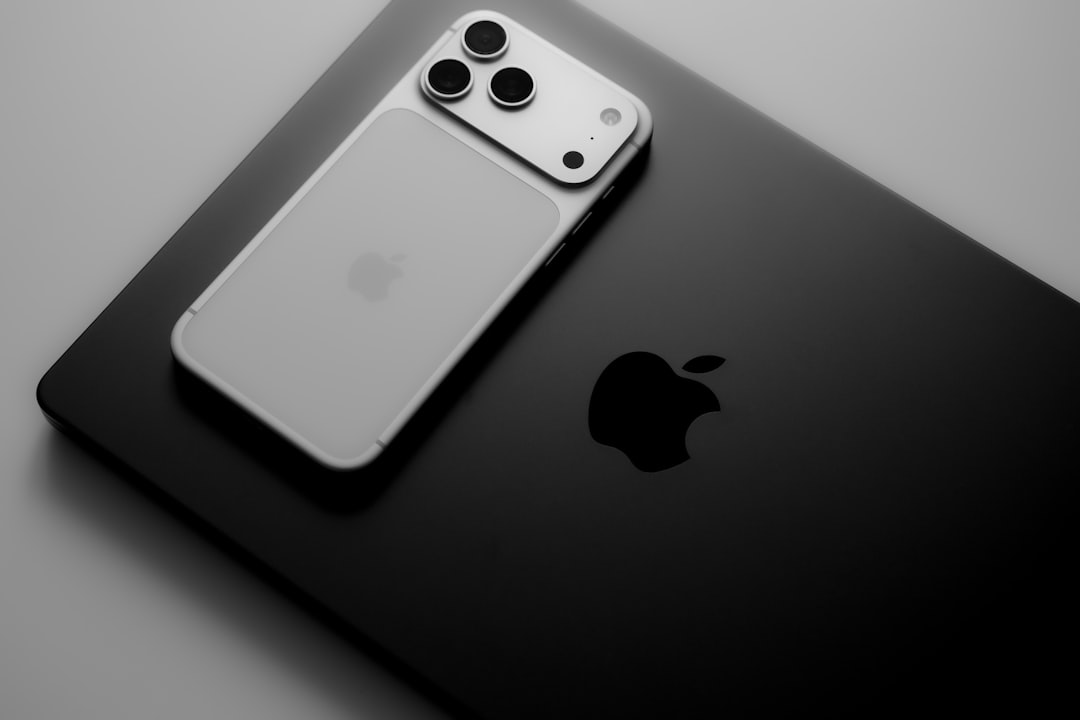
Apple’s foldable iPhone could be just around the corner
Photo by ubeyonroad on Unsplash
Apple’s foldable iPhone won’t save us.
It’s been a decade since Samsung first awkwardly shoved the Galaxy Fold into our collective consciousness, a device that felt more like a proof-of-concept held together with spit and prayer than a finished product. Here we are, all these years later, still talking about Apple joining the party, as if their late arrival will somehow sprinkle magic dust on a form factor that’s proven itself niche, fragile, and astronomically expensive. The rumor mill, ever-churning, now suggests Apple’s “iPhone Flip” or “Fold” might actually hit the market by late 2025 or 2026. Pardon me if my excitement remains firmly in the ‘flatline’ category.
Why Foldables Haven’t Folded In Consumers
Remember when 3D TVs were going to revolutionize home entertainment? Or how about curved TVs? The tech industry, bless its heart, loves to invent problems for solutions to fix. Foldables, for many, fall squarely into that category. They’re undeniably cool in a demo reel, but in daily life? Not so much.
The core promise of a foldable phone is more screen real estate in a pocketable form factor. Great. Except that extra screen comes with a laundry list of compromises. The screens themselves are more delicate, often using ultra-thin glass or specialized polymers that scratch if you look at them funny. Then there’s the crease, that persistent, inescapable valley running down the middle of your glorious new display. Some manufacturers have gotten better at minimizing it, but it’s always there, a subtle reminder of the engineering gymnastics required.
Battery life takes a hit too. You’re powering two screens, or one very large screen, often with a battery split between two halves of the device. That’s not a recipe for all-day power without significant compromises elsewhere. And let’s not even get started on the price. Early adopter tax is one thing; the “foldable tax” feels like a perpetual surcharge on an unfinished product.
The Engineering Hurdles Apple Will (Eventually) Clear
Apple’s entire ethos is about refinement. They don’t jump into new categories until they believe they can deliver a “magical” experience, usually after everyone else has already released three generations of janky prototypes. This is why we’re seeing them sit out the foldable craze for so long. They’re watching Samsung, Motorola, and Google bash their heads against the wall, learning from their mistakes.
The hinge mechanism is crucial. Samsung’s early attempts were notoriously fragile, collecting dust and debris like tiny digital lint traps. Modern hinges are more robust, but they still add bulk and complexity. Apple will undoubtedly aim for a hinge that feels seamless, durable, and doesn’t create a massive gap when folded shut. Their patents suggest a multi-link design, potentially involving self-healing screen materials, which sounds like something out of a sci-fi novel but also exactly the kind of over-engineered solution Apple loves.
Displays are another big one. The crease. Apple hates imperfections. Their screens are renowned for their uniformity and clarity. A visible crease would be anathema to the Apple brand. They’re likely waiting for advancements in flexible OLED technology that can truly minimize or even eliminate the crease, perhaps through more advanced display layers or self-repairing polymers. Ars Technica has covered some of the display tech advancements that could make this a reality.
The Cost of Innovation (Or Lack Thereof)
Let’s talk money. Current foldables from competitors often retail north of $1,500, sometimes closer to $2,000. An Apple foldable? Prepare your wallets for a supernova. We’re talking iPhone Pro Max prices, then add another $500 to $1000 on top. This immediately relegates the device to an ultra-premium, ultra-niche segment of the market. It won’t be a mainstream device; it’ll be a status symbol, a tech flex for those who have more money than sense.
This brings up a larger point about “innovation” in the smartphone space. For years, the industry has struggled to truly differentiate beyond incremental camera improvements or faster processors. Foldables look innovative, but they don’t fundamentally change how most people use their phones. It’s a different form factor, not a different paradigm. I’ve seen this play out with every new “revolutionary” phone feature, from force touch to modular phones. They get a splash, then quickly fade into the background as people realize their old phone worked just fine.
Reddit’s Cynical Echo Chamber
The r/gadgets community, bless their jaded hearts, is largely in agreement with my skepticism. You see comments like “Another $2000 phone that still won’t have USB-C globally and a battery that barely lasts a day,” which, while a bit hyperbolic on the USB-C front for new devices, captures the general sentiment of weary resignation. Others chime in with “I’ll wait for the third generation when they’ve actually fixed the screen durability and the crease,” a sentiment born from years of watching tech companies release half-baked products.
There’s also the inevitable “If Apple does it, everyone will suddenly say it’s innovative” crowd, which is a fair point. Apple has an undeniable ability to legitimize technologies that have floundered elsewhere. Remember smartwatches? Tablets? MP3 players? They weren’t first, but they made them work for a mass audience. The question for foldables is whether the core concept itself has enough mass appeal, even with Apple’s polish. I’m not convinced.
The Apple Premium: Is It Worth It?
Apple commands a premium for its products, and people pay it. They pay it for the ecosystem, the software-hardware integration, the perceived privacy, and the undeniable resale value. But with foldables, that premium feels like it’s being applied to a category that hasn’t proven its long-term viability.
| Feature Area | Current Foldable Challenges (General) | Apple’s Expected Approach (Speculative) |
|---|---|---|
| Screen Durability | Prone to scratches, creasing, delamination | Proprietary “self-healing” layers, robust UTG |
| Hinge Mechanism | Bulk, dust ingress, visible gap when closed | Seamless, multi-link, dust-resistant, no gap |
| Battery Life | Often compromised by dual screens/large display | Highly optimized software, potentially stacked cells |
| Software Adaptation | Inconsistent app scaling, UI quirks | Deep iOS integration, specific app developer guidelines |
| Price Point | $1500 - $2000+ | $1800 - $2500+ (initial generations) |
| Overall Value | Niche appeal, compromises for form factor | Premium experience, but still niche for many |
Having covered CES and MWC for years, I’ve seen countless demos of flexible displays, rollable phones, and other exotic form factors. They always look incredible under controlled conditions, bathed in perfect lighting, handled by someone specifically trained not to break them. Then you get them in the real world, and the magic quickly evaporates. The early reviews for many foldables often mention the “wow” factor, quickly followed by caveats about durability, software jank, and that ever-present crease.
Potential Use Cases Beyond Flexing
If Apple truly wants to make a foldable more than a novelty, they’ll need killer software. A larger, foldable screen opens up possibilities for enhanced multitasking, more immersive gaming, or better content consumption. Imagine a “mini-iPad” in your pocket, or a truly flexible pro tool for artists or designers.
A foldable iPhone could serve as a portable canvas for Apple Pencil, bridging the gap between iPhone and iPad. Or perhaps it could leverage its unique form factor for new camera experiences, using the folded screen as a kickstand for hands-free video calls or stable time-lapses. These are the kinds of thoughtful integrations Apple could bring, rather than just porting existing tablet UI. Reuters has previously reported on Apple’s patents related to foldable displays, indicating they’re thinking beyond just the physical hinge.
But even with clever software, the fundamental questions remain: Does the average user need this? Does it solve a problem they actually have, or one that’s been manufactured for them? Most people want a phone that’s reliable, has great battery life, takes good pictures, and doesn’t cost an arm and a leg to replace if they drop it. Foldables, by their very nature, work against several of those desires.
The Real Innovation Apple Needs
Instead of chasing a form factor that hasn’t truly resonated, Apple could focus its considerable resources on other areas. Imagine a truly revolutionary battery technology that gives us days of use, not hours. Or perhaps advanced haptics that create entirely new tactile experiences. What about augmented reality integrations that are actually useful and not just gimmicky filters?
The industry needs a genuine paradigm shift, not just a different shape for the same old rectangle. Apple, more than any other company, has the power to drive that shift. But by entering the foldable market, they risk legitimizing a category that, for all its flash, still feels like a compromise. They’ll undoubtedly make the best foldable, but will the best foldable still be… just a foldable?